
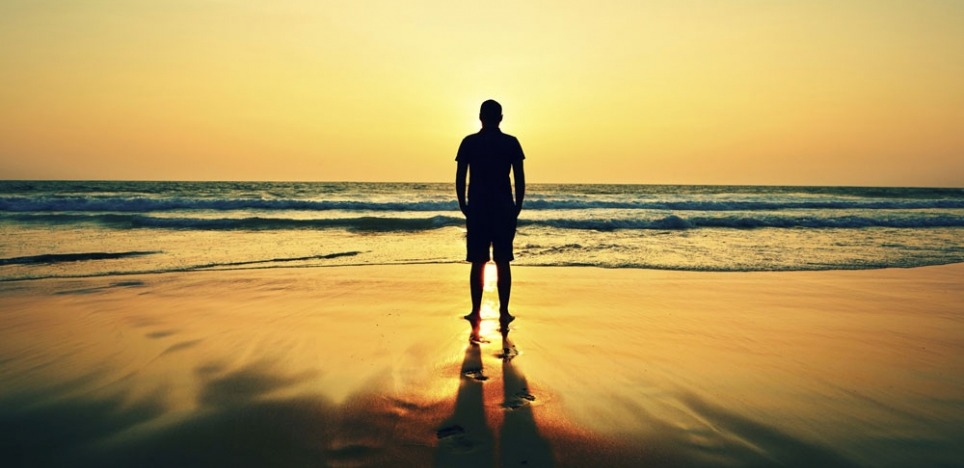
You are probably thinking, “Wait. What is a post on ‘solitude’ doing in a leadership blog?” After all, aren’t leaders expected to be comfortable around people, know how to talk to them, encourage them and celebrate their successes? In other words, aren’t leaders those who lead people? It turns out that solitude has a significant role to play in a leader’s life. What exactly then is ‘solitude’? It is not only “the quality or state of being alone or remote from society” (Merriam Webster) but also “a state of being alone without being lonely that can lead to self-awareness” (Psychology Today).
Being alone and being lonely are not the same. Giving myself a chance to stay alone for a short period of time means I have consciously distanced myself from outside stimulation. While this can feel like a luxury on some days, I know that seeking solitude in a deliberate way helps me in powerful ways. This "me time" helps me catch my breath and explore my own thoughts, feelings and priorities. I am better able to process tough experiences and learn from them. I am able to see more clearly what I can do, what I cannot, what really matters and what I need to jettison. Solitude helps me even (especially?) when deadlines loom and stress levels spike. When I think about all that is happening, in a calm and intentional way, I find things start falling into place. I become more mindful, my mood improves, and my planning becomes more effective. The VUCA world around me becomes more manageable.
Here are a few ways I give myself some solitude:
- Keeping away my phone. This was initially harder to do than I expected, but like everything else, it got easier with practice. Turning off all notifications certainly helped.
- Having quiet mornings. Mornings are when I enjoy my coffee and a cryptic crossword in silence. This “quiet time” is akin to meditation for me and it prepares me to look forward to the rest of the day.
- Scheduling whitespaces in my calendar. If you have never done this before, it will induce feelings of guilt the first few times. I think of these as “Recharge Time” so I am able to protect them from interruptions.
- Using early arrivals as a buffer. I arrive 15-20 minutes early for meetings and appointments and spend the extra time in quiet reflection.
While it is true that leaders need to network and spend time with their team members, it is essential to take some time out on a regular basis to re-connect with oneself, to reflect, to refresh. Intentional solitude helps us stay grounded and focus on ourselves away from the world's noise. It helps us maintain balance in the face of pressure and remind ourselves of what is truly important. Just as airlines tell us to apply the oxygen mask on ourselves before helping others in an emergency, we can look at solitude as a way to take better care of ourselves first.
I realize that for most of us, this is easier said than done. On a recent train journey, a fellow passenger was unable to sit still. She alternated between YouTube videos and conversations with her family, all with the volume dialled up to 11, disturbing several people in the train, and getting more agitated as she talked. I was reminded of the French mathematician Blaise Pascal’s humorous words, “All of humanity's problems stem from man's inability to sit quietly in a room alone”.
As leaders, what do you do to step back so you may take stock of all that faces you and introspect? I’d love to hear from you on how solitude has helped you.
Well said, Ravi. Many of our problems arise from our inability to simply sit quietly with ourselves. Such a beautiful write-up. I must admit, it took me 6–7 attempts—maybe more—to finally step away from YouTube and other distractions to read this in peace.
Very true. Bill Gates used to go on a solitary retreat for a “think week” in a cabin in the Pacific Northwest once or twice a year for the same purpose.
Hi Ravi, great topic and post.
I wanted to add that Blaise Pascal’s words go beyond humor. Indeed, it is the very focus of Yoga as mentioned in Patanjali Yoga Sutras: “Yoga Chitta Vritti Nirodah” – which can be translated as “stopping the fluctuations of the mind” or “stilling the mind”. Patanjali goes further into what he classifies as the “5 States of Mind’ called Chitta Bhumis – Kshipta (restless), Mudha (dull), Vikshipta (distracted), Ekagra (focused), and Niruddah (Mastered) – the objective being to move from lower states to the highest state of Samadhi.
A quote attributed to Meher Baba and Eknath Easwaran says:
A Mind that is Fast is Sick
A Mind that is Slow is Sound
A Mind that is Still is Divine
Unless and until one is able to still their own mind, they can get lost in the turbulence. As such, this is important not only for leaders – it is important for every human being. Ultimately, all of one’s life experience is based on their own mind activity. That makes it imperative for everyone to explore these concepts further.
Nice blog Ravi. Silence, Solitude, quiet time are all well established practices of corporate leaders, thought leaders and Yogis alike cos they allow reflection and introspection which is the source of leadership in all its dimensions – credible, authentic, compassionate and strategic etc. “Speed is the enemy of reflection”
This is a very insightful blog Ravi. Solitude is indeed imperative for reflection, creativity and inner exploration and that is communicated through the article. Important yet so difficult for us to internalize and follow.
I would like to share my favourite quote – “If you are never alone, you cannot know yourself.” — Paulo Coelho.
Solitude is required to get work done, loneliness not a good thing.
Very well said, Ravi !
Really loved this — the way you’ve framed solitude through simple habits makes it so relatable. The oxygen mask analogy hit home too. A great reminder that solitude isn’t absence, but preparation. Grateful for the perspective, as always.