
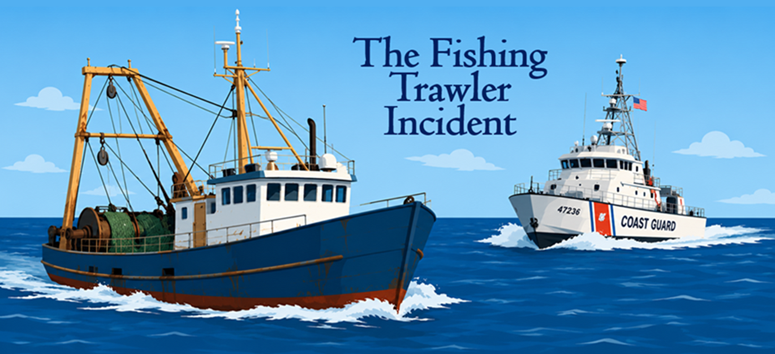
On September 7, 2010, a Chinese trawler (Minjinyu 5179) was operating in disputed waters in the East China Sea near the Senkaku Islands when Japanese Coast Guard (JCG) boats ordered it to stop for inspection. The trawler refused to comply and in attempting to flee the scene, collided with JCG boats. Matters escalated quickly. The captain of the trawler was arrested the next day. The trawler, its captain and crew were taken to Japan for detention. China protested the manner in which the trawler’s men were treated, summoned Japan’s ambassador repeatedly to explain the reasons for the detention and cancelled joint high-level gas/oil exploration talks with Japan. China took a further punitive step: Chinese Customs began blocking the shipment of rare earth elements to Japan.
At the time, Japan depended on China for 90% of its imports of rare earth elements, which are essential for electronics, hybrid and electric vehicle motors, batteries, precision magnets, and defense and aerospace technologies.
The episode exposed Japan's vulnerability to supply-chain dependence and the nation acted swiftly. It diversified suppliers (especially through partnerships with Australia's rare-earth industry), developed technologies to use alternative materials, increased recycling of rare-earth materials, developed technologies that reduced rare-earth usage and built strategic stockpiles.
As leaders, we can learn many lessons from this incident:
- Concentration risk can hide in plain sight. Japan's 90% dependency on a single supplier wasn't a secret; it was just never stress-tested. Leaders can audit their critical inputs (suppliers, platforms, key customers, even key employees) not by "how likely is disruption" but by asking "what happens to us if this is unavailable for 60 days?"
- The disruption and the trigger are often unrelated. The rare earth squeeze wasn't really about rare earths; it was a fishing boat collision. The actual shock came from a domain leaders weren't watching (diplomacy, not minerals markets). Leaders can ask, “how can I bring a ‘systems thinking’ approach to our operations, so I know where to look to identify imminent threats?”
- Speed of response matters. Not willing to wait for certainty about China's intent, Japan moved within a month with real capital ($1.2B). They demonstrated a bias for action while the ambiguity was still unresolved. Leaders can ask themselves, “what is the cost of delayed decision making?”
- The fix was a portfolio, not a single silver bullet. Diversification, substitution, recycling, stockpiling, efficiency: Japan pulled five different levers simultaneously, avoiding making a single big bet. Leaders can consider, “how do we attack this problem from multiple angles?”
- Unilateral fixes come with a ceiling. Japan cut its dependency from 90% to 60% — meaningful, but it leveled out, because the underlying market structure (China's dominance) didn't change. Leaders can ask, “is the risk we’re solving actually an ‘our company’ problem or a ‘our whole industry’ problem?”
In calm times, resilience work is unglamourous and budget approvals are slow. But effective leaders do not wait for a crisis to act. While a crisis focuses the mind like nothing else, we can perhaps act preemptively with insights from our team members and thus gain a real edge.
Leaders can ask, “what's our equivalent of a trawler collision?” In other words, what small, plausible event in an adjacent domain could lay bare a critical dependency and hurt us? Would it even be a Grovian inflection point? I’d love to hear your thoughts on this topic.
Excellent, especially the awareness of how a seemingly unrelated incident can have a crucial impact
Wonderful insights on risk management and problem solving. This really helped me have a new perception on how to think when a risk strikes. Thank you, Ravi